

Old Oakland
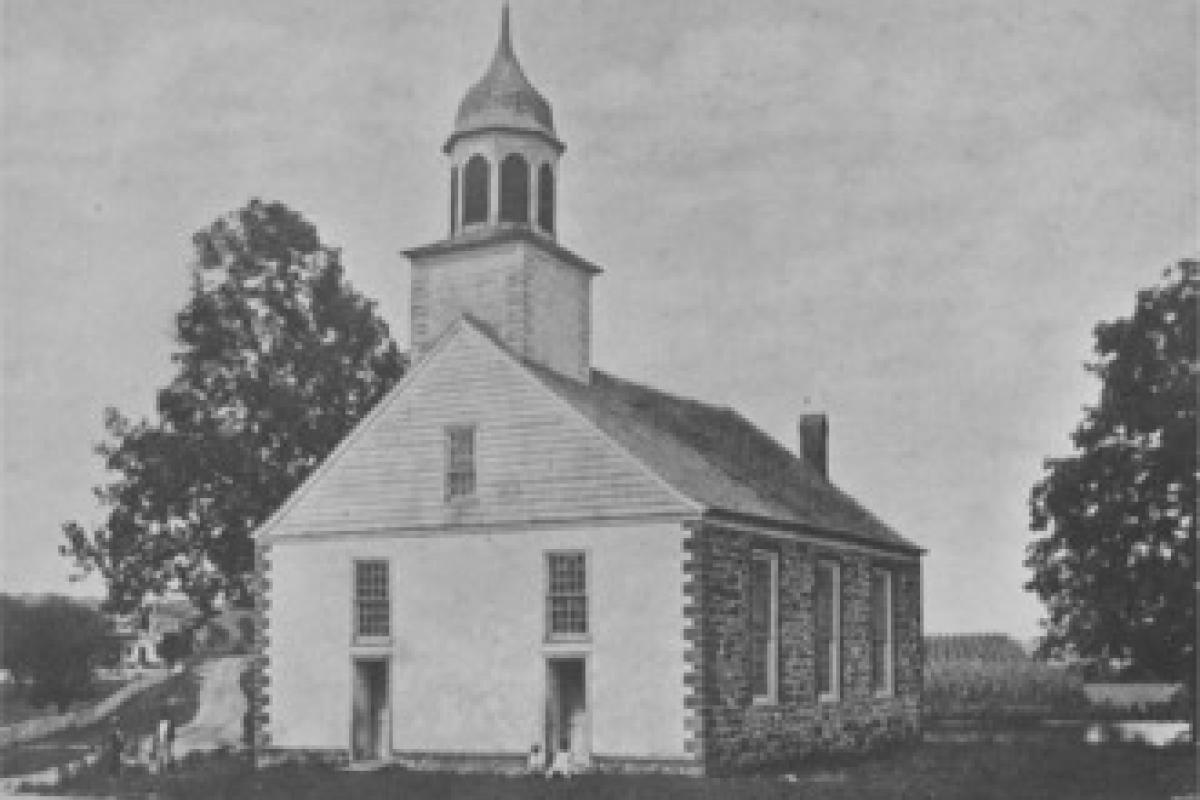 This is the earliest known picture of the 1829 Ponds Church dating from the 1870s. It's dating emanates from the presence of 2 front doors (one for men and the other for women) and the presence of rectangular windows on the side. A singular front door and gothic style windows were installed by Mr. Demarest in 1878 and remained until the church was razed in the 1930s. As a perspective, the front of the Ponds Church would be facing the current Burger King.
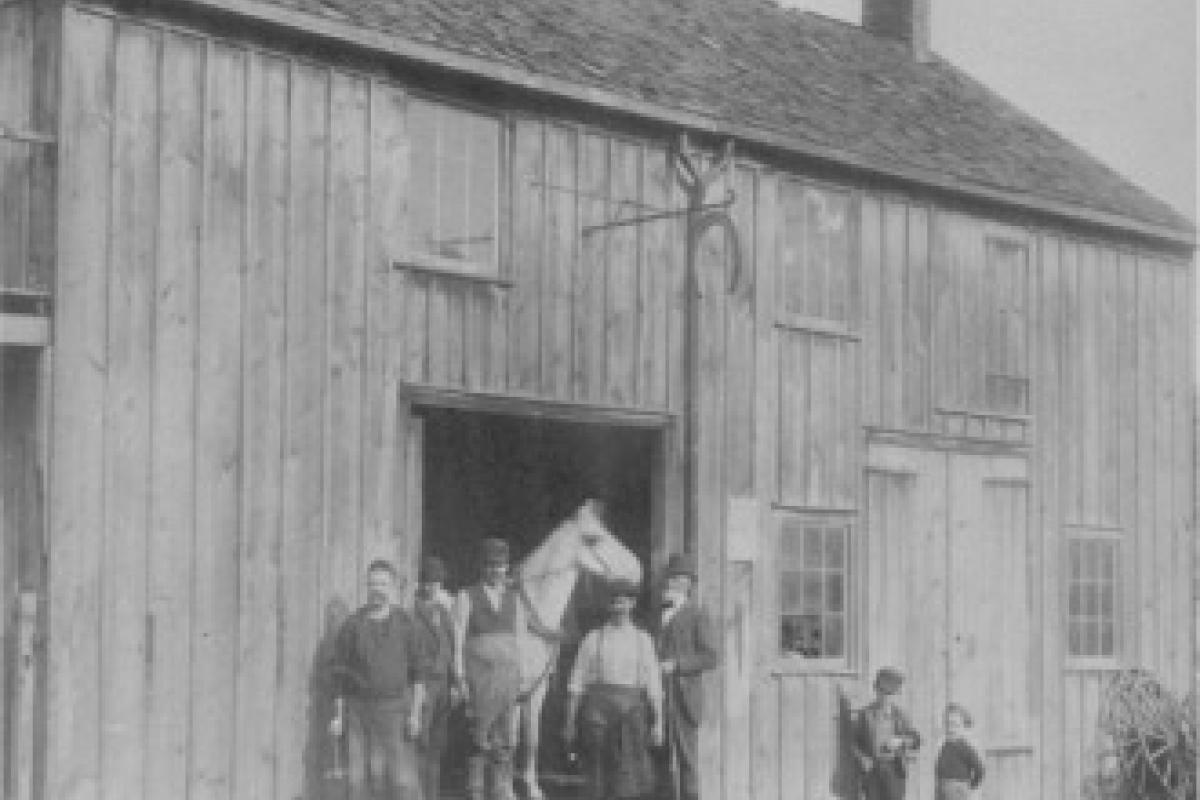 Here is a blacksmith shop from Oakland's horse and buggy days before the turn of the 20th Century. Blacksmiths not only fit horses with shoes but they also made household utensils, iron gates, hinges, etc. The boys on the left are Harry Gale McNomee and Ernest Lloyd McNomee. Harry would grow up to be one of Oakland's leading citizens.
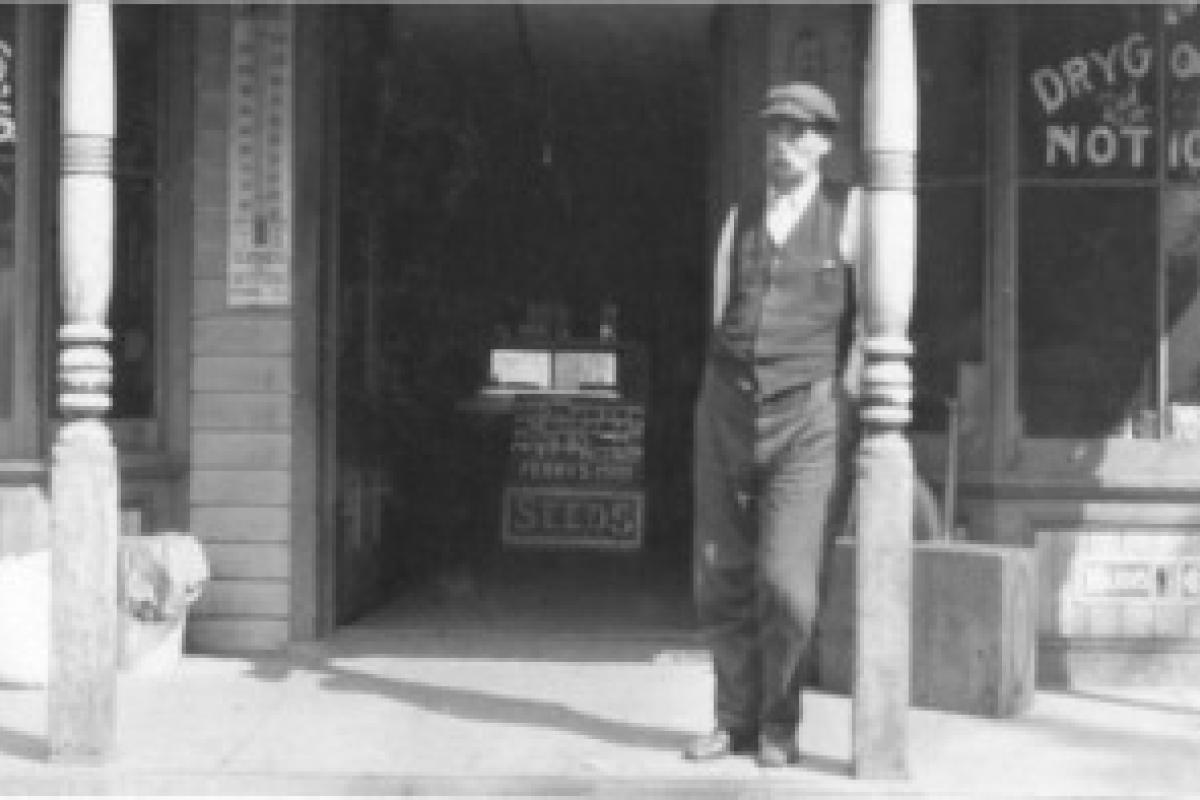 There is perhaps no better picture than this to depict Main Street in Oakland around 1915. Here we see Albert McNomee standing in front of his general store gazing down an unpaved Main Street (now Ramapo Valley Road) toward the old Oakland train station that was to be torn down in 1959.
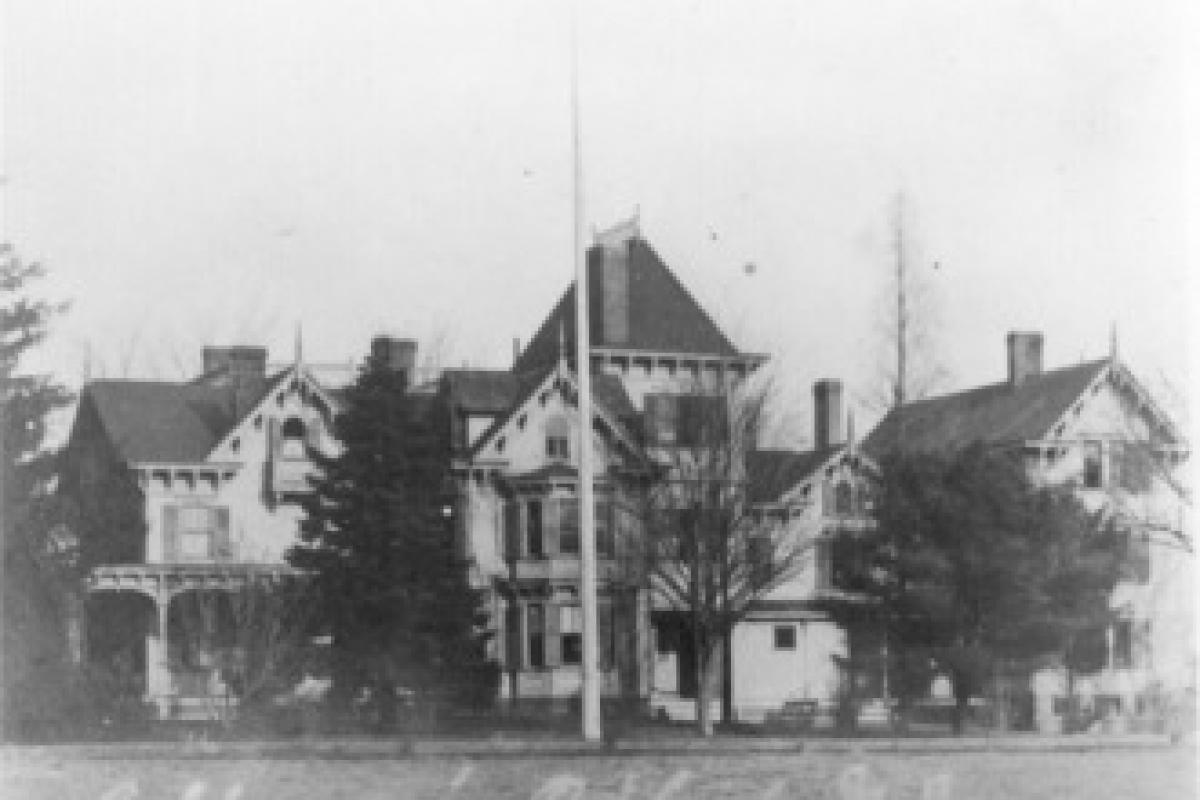 This grand Victorian building is / was the rambling Calderwood Hotel. The core building was built by Mr. Bush in the early 1800s as part of his 150 acre farm. Purchased by the Calder family in the 1870s, it was greatly modified and expanded to become the Calderwood Hotel after the death of Mr. Calder in 1883. In 1935 it was purchased by Captain John Scarca for use as the Oakland Military Academy until August 21, 1962 when it was razed to make room for a parking lot in what is now the Copper Tree Mall.
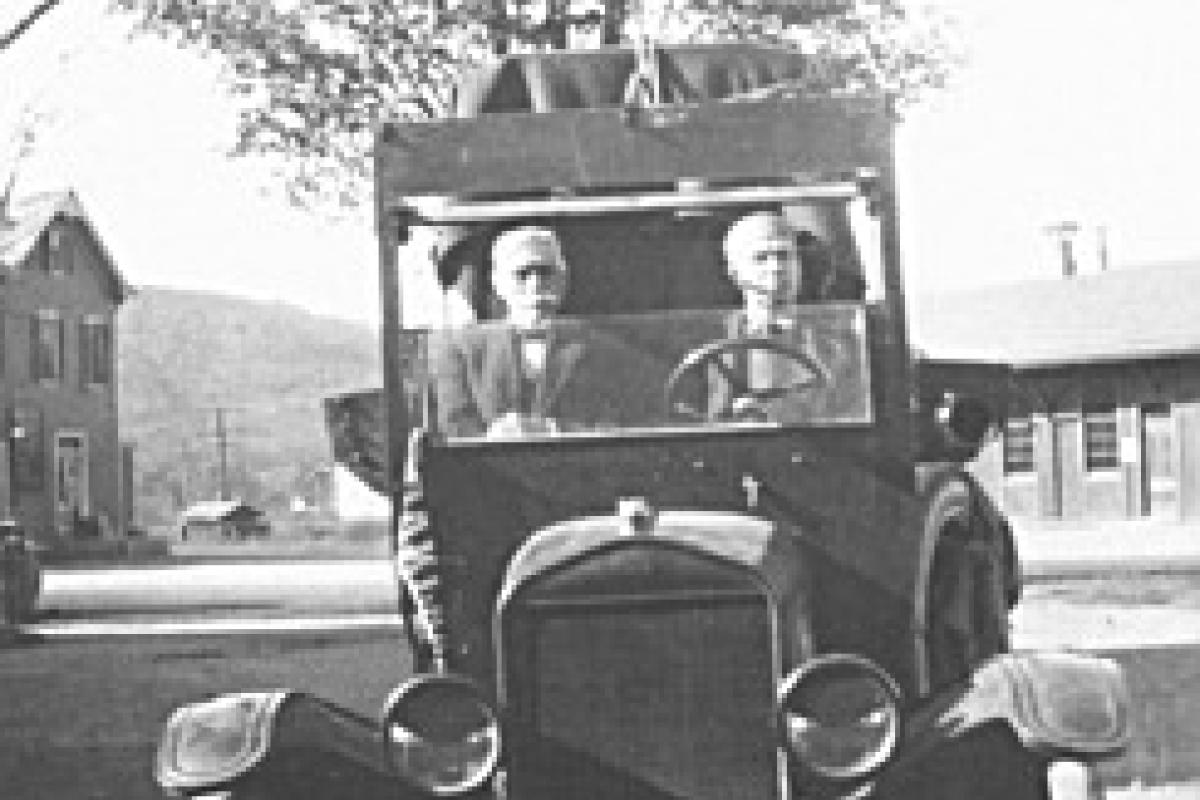 Seen here in about 1910 is Mr. Forshay, on the right, with an associate making his way up Yawpo Avenue that was then a dirt road. In the background on the right is the old railroad station. It wasn't until the 1940s that Yawpo Avenue was extended into Franklin Lakes.
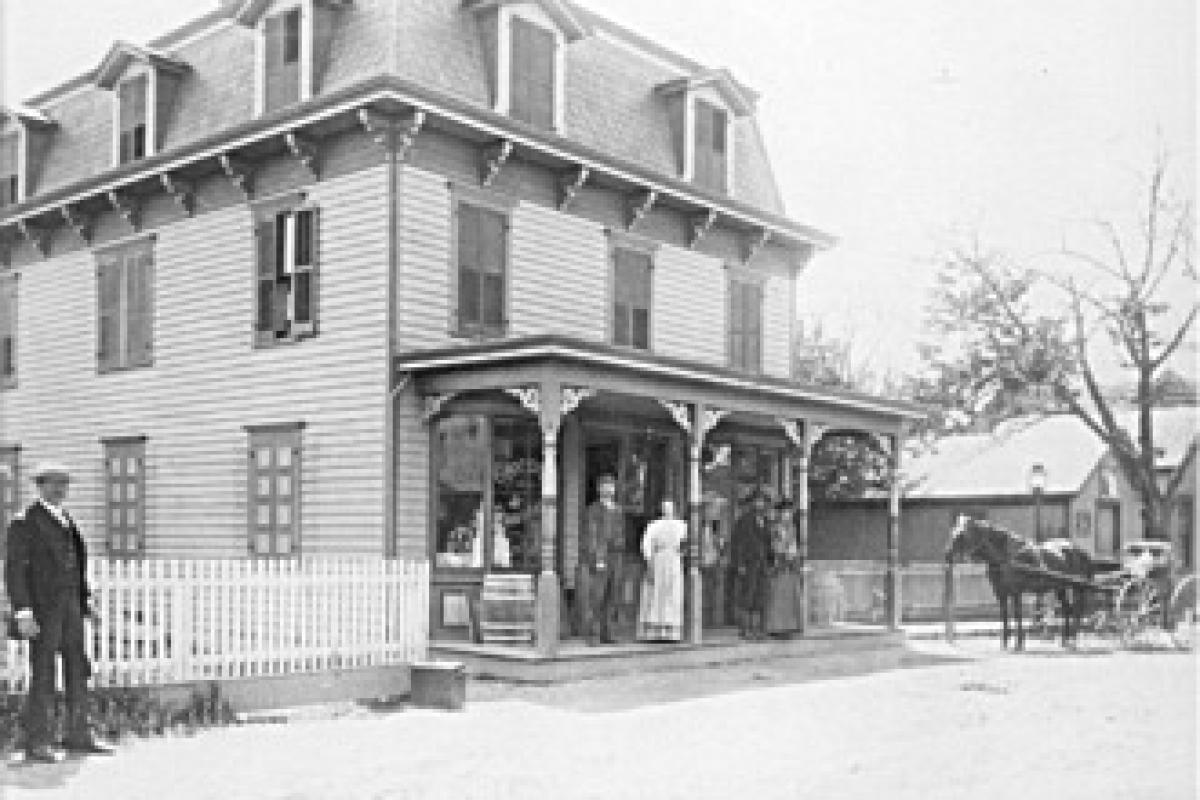 This is the Lloyd-McNomee store as it looked in the 1890s. John Lloyd originally purchased it from Henry Bush in 1874 and formed a partnership with Lloyd Porter. In 1880 Albert McNomee became a partner forming the Lloyd-McNomee store until 1925 when it was sold to the Great Eastern Company with Thurman Rogers as manager. Standing on the porch to the left is John and Lavina Sanders. The Lloyd-McNomee Store today is an upholstery shop. The mostly obscured building on the extreme right is Greenwood's Meat Store.
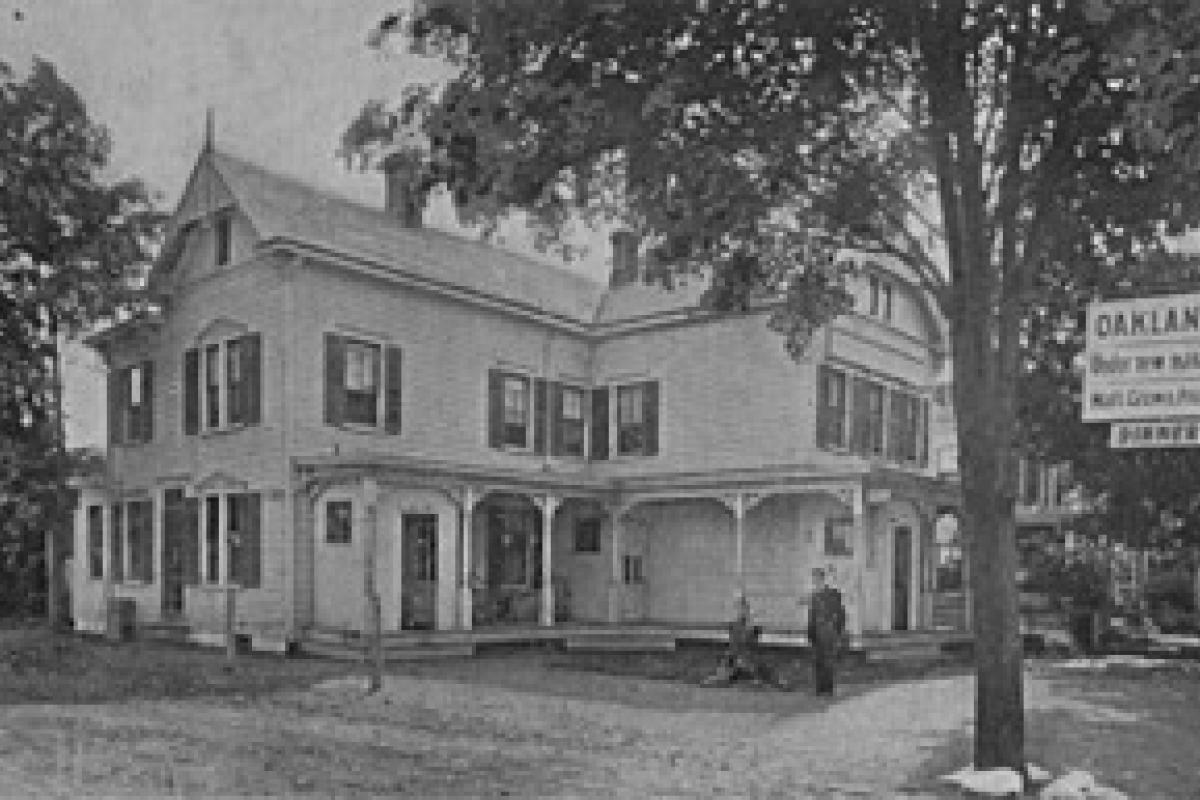 Before there was a Garden State Dairy Store and it's replacement, Krauszers, there was the Oakland Inn pictured here prior to 1920. Located at the corner of Ramapo Valley Road and Yawpo Avenue, the Oakland Inn catered to thousands of summer visitors, with rooms to rent and complete dinners for the princely sum of 75 cents.
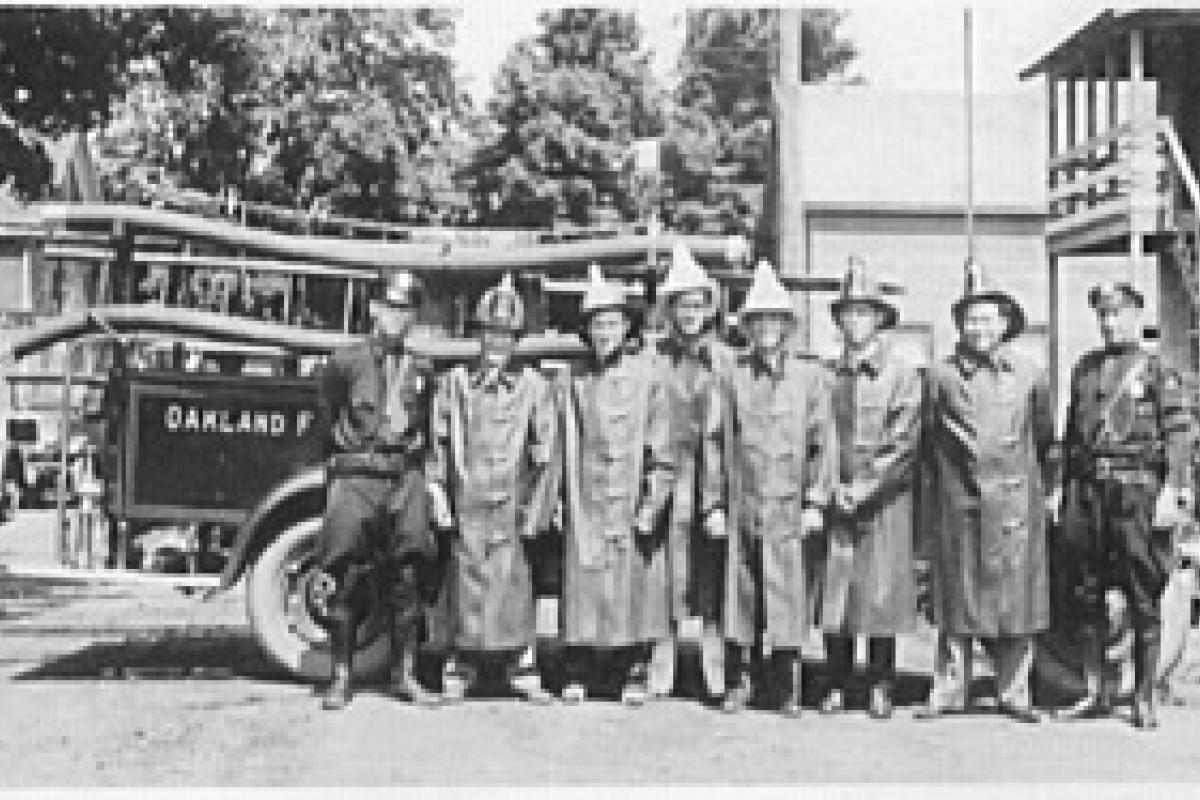 In 1935 Oakland was still a tiny community requiring only two policemen and six firefighters as pictured above. Here standing on the corner of Yawpo and Vine Street (now Raritan Avenue) are (l to r) policeman Harry Melville, firemen Al Potash, Harold Munn, John Melville, Fire Chief Jim Munn, Elmer Carlough, Ben Otto and policeman Harry Farrel.
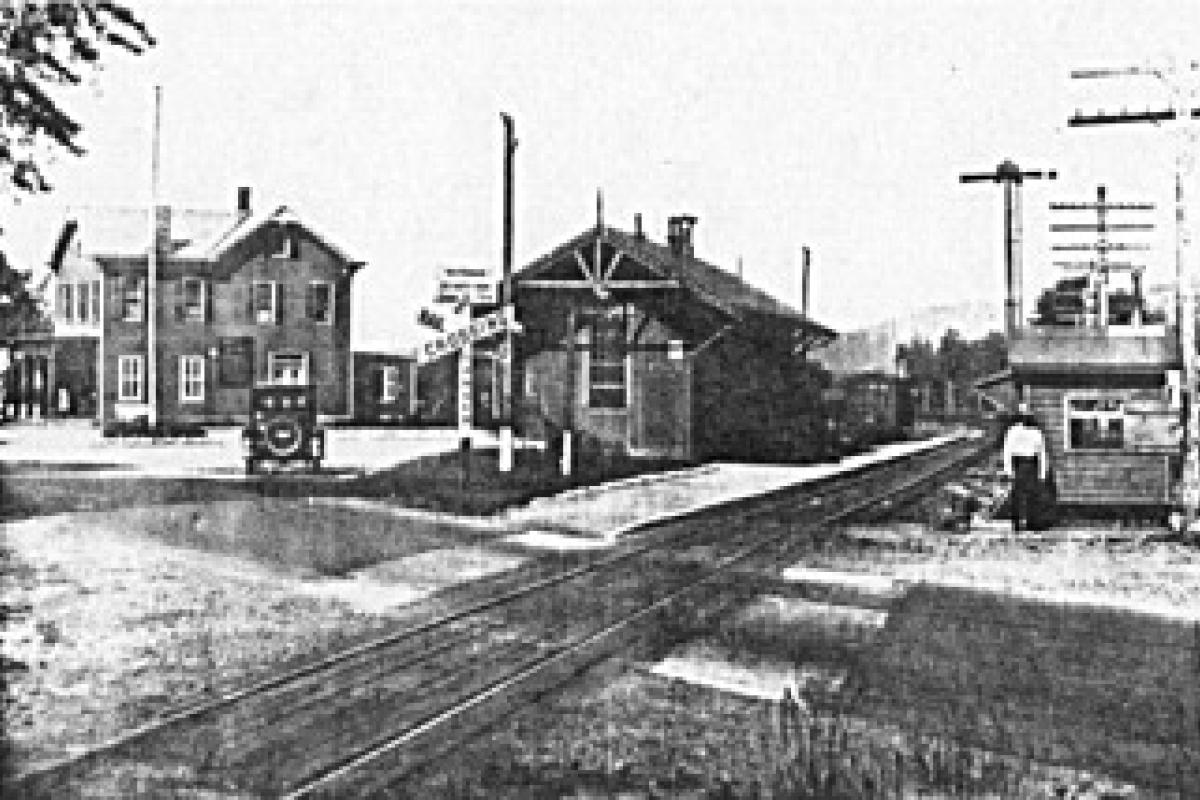 Life in simpler times. Here seen is the old Oakland railroad station in the late 1920s. Notice the man standing next to the small building. He was the Crossing Guard who manually lowered and raised the barrier to protect cars from crossing trains. However, his hours were limited from 7:00 AM to 4:00 PM.
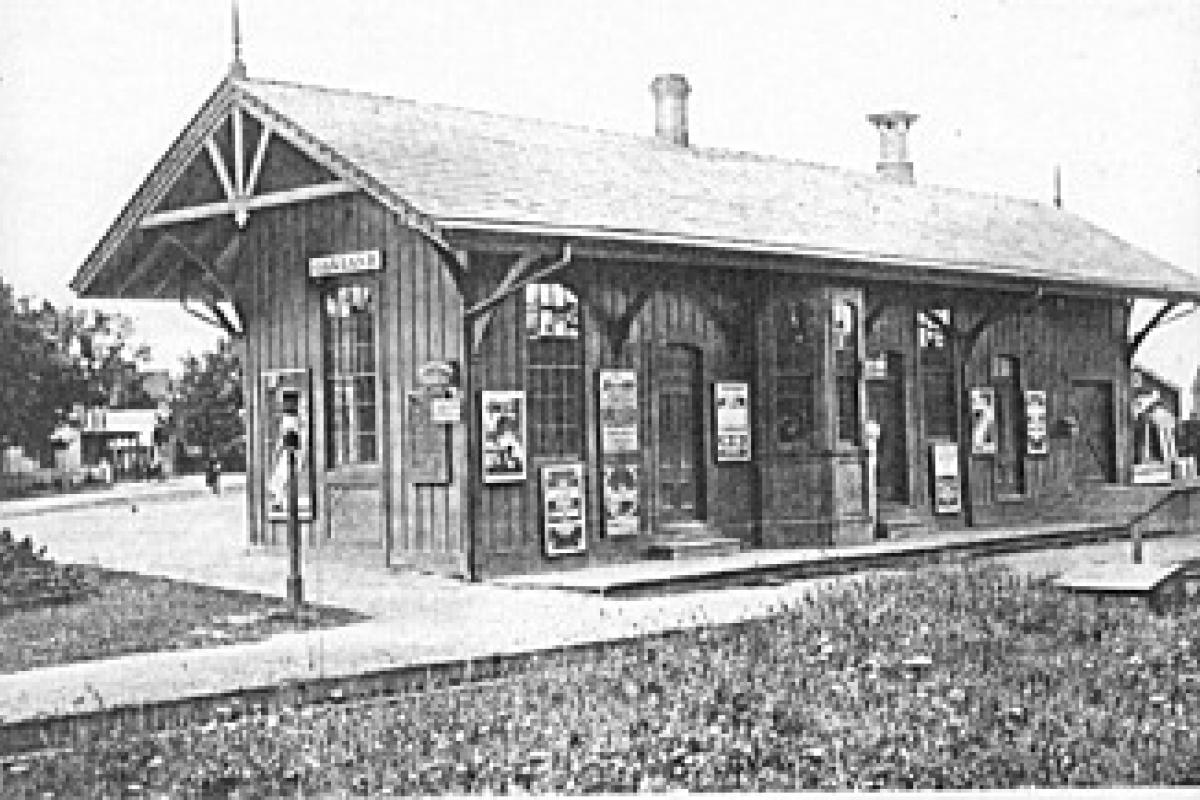 This is the old Oakland railroad station in its final glory. Since it was built in 1869, it had been expanded at the rear as seen here to create a freight and mail storage area. The elevated platform was built to be at the same level as the freight train doors to facilitate the movement of the cargo. Notice the coal oil lamp on the left which dates this photo to be prior to the advent of electricity in Oakland on August 1, 1916.
The photos and captions above are excerpts from the book "Images of America: Oakland" written by Kevin Heffernan and John Madden.
“History gives us a perspective….it imposes a sense of guardianship, of trust, a reason for proper care of the resources which served our forefathers and must also serve our heirs.” -Arthur Vervaet, Mayor, Oakland, NJ 1952
Thus from the author’s comments is the context of the recently released pictorial history of Oakland by John Madden and Kevin Heffernan through Arcadia Press. It celebrates the history of our community from roughly 1860 to 1964. The work is 128 pages containing over 200 photos and text weaving a multi-faceted portrait of a people who lived here and who founded a community. Its story is a fabric of ordinary people who sought their independence to form their own destiny and whose residential descendents celebrate their accomplishments. In a sense it is a miniature of the American experience: men and women wanting betterment and to be free of remote government willing to risk their destiny and that of those who follow.
In a recent interview on WGHT 1500 Radio, the authors were asked why they wrote this book. Their answer was stark. “Because no one was doing it and because it needed to be done.…to honor those who came before us, to help the residents of Oakland better appreciate our small community and to assist future generations know and appreciate Oakland’s roots.”
Madden and Heffernan have developed 9 chapters in pictures and text serving as a canvas to create their portrait of this historical walk into Oakland’s past.
Chapter 1 - Vistas, Views and Maps
Chapter 2 - A Valley of Homes
Chapter 3 - The Page Estate and the Van Allen House
Chapter 4 - Business and Industry
Chapter 5 - A Stroll Down Main Street
Chapter 6 - The Ponds Church
Chapter 7 - Oakland On The Move
Chapter 8 - Oakland As A Tourist Town
Chapter 9 - Serving Oakland with Pride and Distinction
Each chapter recalls important people, places and buildings of Oakland’s heritage and recounts sadly that many no longer exist. While serving as a lament to what has been destroyed by '‘development'’ the authors equally hope that it inspires a renewal of the appreciation of Oakland’s heritage and a public demand to preserve the remaining historic buildings.
Madden and Heffernan pointed out that the book is an excellent fundraiser for every school and civic organization. Organizations and school groups can generate $8.00 per book profit when ordered directly from Arcadia Press at 1 (888) 313-6225.
The book is available at the Oakland Public Library as well as many retailers in Oakland including:
Cafè L'Amore
Deli Sensations
Elm Street Grill
Hansels
Krausers
Oakland Pharmacy
Pete and John's Paint Store
Oakland Shop Rite
Valley Pub
These retailers, catching the community spirit, will be donating their profits to the Oakland Library Building Fund.